
Our story: A Historic Catskills Estate Since 1851
The history of our place spans centuries—from Indigenous footsteps to steamboat captains, from wartime heroes to Hollywood stars.
By Casper de Boer, co-owner & founder of Roxbury Barn & Estate | Updated 2/22/2026
the Lenape People & the Catskills
Long before Dutch settlers pushed up the Hudson River into what would become the Catskills, this land was home to the Lenape and Mohican peoples, among others of the Iroquois Confederacy. They lived and traveled through these hills for millennia.
The town of Roxbury itself wasn’t formally established until 1799, and by 1845 had grown to over 3,000 residents — thriving on dairy farming and a product that made it famous well beyond the region: Roxbury Butter.
1825: The first house
The estate’s recorded history starts in 1825, when a man named Patterson built a modest house at the intersection of Stratton Falls Road and Scott Green Road.
His son William, a skilled wagon maker, went on to serve in the Civil War with the 144th Infantry Regiment of New York Volunteers — where he struck up a friendship with Brigadier General Charles Suter that would eventually reshape the property’s story.
1870s: Captain Patterson’s return
After the war, William Patterson built a successful career as a Mississippi steamboat captain. He came back to Roxbury with money, ambition, and a wife — Leonora, from Baltimore.
He sold his father’s original house to his old friend Charles Suter, acquired adjacent land, and built what became known as The Captain’s House: a stately residence with a wraparound porch, positioned in front of the three-story bank barn.
After the Captain died in 1896, Leonora stayed on as a beloved figure in Roxbury well into her seventies, before eventually returning to Baltimore.
1920s: The Van Benschotens and the cauliflower fields
The estate passed to Laura and Orson Van Benschoten — members of the family that had founded nearby New Kingston. They farmed the land intensively, turning the rocky soil into rows of cauliflower. Nicknamed “white gold” in the area, cauliflower was a premium cash crop, sustained by our ideal, cool, mineral-rich mountain soil.
When Orson aged out of the hard labor in the early 1930s, Laura sold the acreage and moved into teaching at rural schoolhouses.
1930s: A city couple’s summer retreat
George and Nell Hafner, a New York City couple, converted The Captain’s House into their summer home. George was a dentist. He made the local Catskill Mountain News when a car fire in the barn required a call to the fire department — a story the property has been dining out on ever since.
1940s: The barn becomes a chicken coop
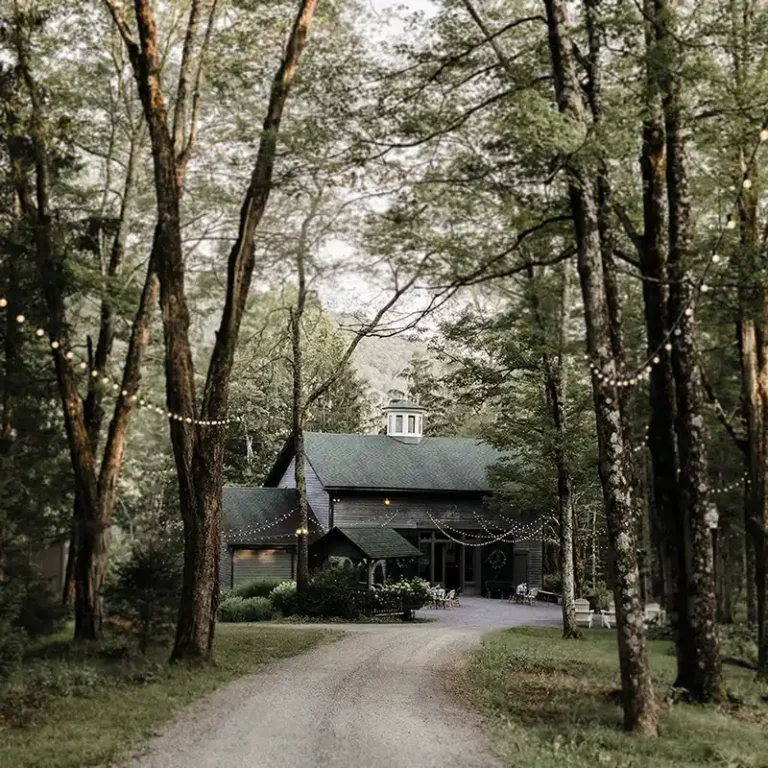
In the early 1940s, the carriage barn was converted into a large-scale chicken coop. Twenty-five windows were added to let in natural light — windows that are still part of the barn’s facade today. The operation shipped eggs to New York City until WWII gas rationing made it financially unworkable. The chickens left. The windows stayed.
1959: The Schreibers move in
When the Hafners passed in the 1950s, their daughter Winifred inherited the estate. She was a Columbia University-educated woman married to Earl Schreiber, who had by then risen to Rear Admiral — having directed the rescue of 125 sailors from the USS Princeton during WWII, an act that earned him the Bronze Star.
The Schreibers moved in permanently in 1959. Winifred became a fixture in the Roxbury community; the Admiral taught at Roxbury Central School. Winifred passed in 1983. The Admiral lived more quietly after that, until his death in 1996, with full military honors.
1999: A Hollywood Film set in the Catskills
In the summer of 1999, the estate was used as a film set for You Can Count on Me, starring Laura Linney and Mark Ruffalo. The Captain’s House appears throughout the film. Linney later mentioned on the Oscar red carpet that her dressing room during filming had been, of all things, a barn.
2000s: From Private Estate to wedding venue
After the film crew left, filmmaker Roger Ross Williams — the first African American director to win an Academy Award — fell in love with the property and bought it.
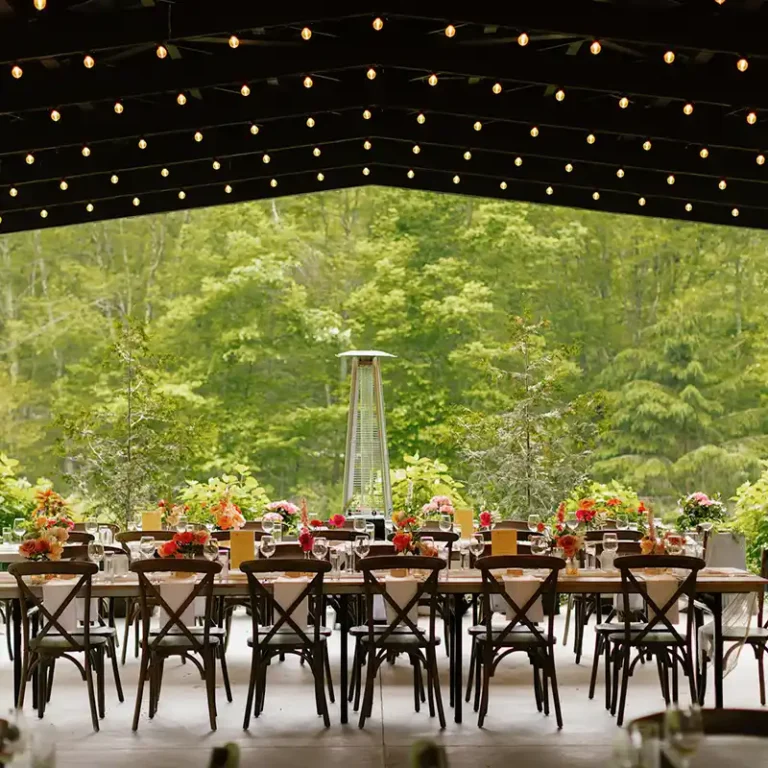
He and his husband Casper spent years thoughtfully restoring and developing the estate. The vision: an intimate, full-service wedding venue where couples could have the whole place to themselves for the weekend. One wedding at a time, on 50 private acres, with farm-to-table catering, coordination, and bar service all offered in-house.
Today
We’ve hosted over 300 weddings since opening, and the property keeps evolving — slowly and deliberately, the way it always has.
The bank barn, built into the side of the hillside, still serves dual purpose: upper level for after-dinner celebrations, lower level for back-of-house operations.
The rolling fields, the Captain’s House, the carriage barn windows, the tall red pines — all of it is here to stay.